Campbellsville, KY · Taylor County
Basement Water Damage Restoration in Campbellsville, KYBasement Drying Services & Basement Floor Water Removal
Basement Water Damage Restoration in Campbellsville includes emergency basement flood cleanup, basement sewer backup cleanup and basement wall drying.
Answered 24/7
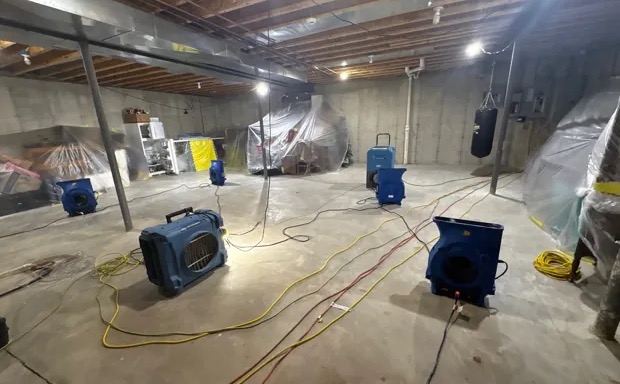
Local Basement Water Damage Restoration Near Campbellsville
A basement dries slower than any other part of a house. The air is cool, there is little sunlight and the concrete holds moisture for a long time. In Campbellsville, that makes extraction and steady dehumidification important.
In Campbellsville, a home with a basement or below-grade room can flood after heavy rain or a blocked sewer line. Local restoration pros serve Campbellsville, Lebanon and Liberty, pumping out water and drying finished and unfinished spaces.
Basement Water Damage Restoration Solutions Available in Campbellsville
Basement Drying Services
Drying a basement takes longer than drying an upper floor because the air is cool and the concrete holds moisture.
Basement Floor Water Removal
Water on a concrete floor is squeegeed and extracted, and floor coverings such as carpet, vinyl or laminate are lifted to dry the slab.
Basement Dehumidification
Dehumidification continues until humidity and material readings are normal. Turning it off too early lets moisture return.
Basement Wall Drying
Concrete and block walls are dried with directed airflow and dehumidifiers, and checked with meters until readings drop.
Basement Mold Prevention
After drying, an antimicrobial can be applied to framing and concrete that were wet, to slow mold on surfaces that stay in place.
How to Know You Need Basement Water Damage Restoration in Campbellsville
Damp or Musty Odors
A damp, earthy or musty smell in the basement often means hidden moisture in walls, carpet or the slab.
High Humidity Levels Below-Grade
A basement that stays damp and clammy even on dry days has a moisture source that needs attention.
Warped or Buckling Basement Floors
Laminate, wood or vinyl flooring that buckles or lifts in the basement has water underneath.
Wet or Stained Basement Walls
Dark, wet patches or tide lines on basement walls show where water seeped in or wicked up.
How Basement Water Damage Restoration Works in Campbellsville
Step 1: Floodwater Pump-Out
Submersible pumps remove deep water, and electrical hazards are checked before anyone walks in it.
Step 2: Deep Moisture Extraction
Extractors pull water from carpet, pad and the concrete floor after the deep water is gone.
Step 3: Air Circulation and Drying
Air movers keep dry air moving across walls and floors throughout the basement.
Step 4: Dehumidification and Verification
Dehumidifiers run until humidity and material readings confirm the basement is dry.
Typical Sources of Basement Water Damage in Campbellsville
Overland Flooding From Storms
Heavy storms and snowmelt can send surface water into basements through doors and walls.
HVAC Condensate Line Overflow
A clogged furnace or air conditioner condensate line can overflow onto the floor of a basement or lower-level utility room.
Stormwater Runoff Into Lower Levels
Heavy rain running off hard ground or a sloped yard can pour down stairwells and under doors into below-grade rooms.
Sewer Line Backups
A blocked or overloaded sewer line pushes wastewater up through basement drains and toilets.
Basement Water Damage Restoration for Homes and Businesses in Campbellsville
Residential Basement Water Damage Restoration
Finished basements used as living space need carpet, pad and lower drywall checked carefully. Soaked materials are removed so the walls and slab can dry.
Commercial Basement Water Damage Restoration
Businesses with below-grade storage need inventory moved out of the water quickly. Wet stock is separated and documented for insurance.
Basement Water Damage Restoration vs. DIY: When to Call the Pros
Fans alone can push damp air into the rest of the house. Basement drying needs dehumidifiers to pull the moisture out of the air and the concrete.
Basement Water Damage Restoration Cost in Campbellsville, KY
Sewage cleanup, finished walls, storm-night calls and damaged appliances all add to the total for basement water damage restoration in Campbellsville.
Access Complexity
Narrow stairs, low ceilings and stored contents can make the work slower.
Affected Square Footage
Larger basements need more extraction, more drying equipment and more days of drying time.
Material Saturation
Finished basements with carpet, drywall and insulation take more removal work than bare concrete.
Does Insurance Cover Basement Water Damage Restoration?
Flood damage from rising outside water usually needs flood insurance. Water from inside the home, like a broken pipe, is more often covered.
Reasons to Hire Local Pros for Basement Water Damage Restoration in Campbellsville
Water Type Handling
Clean water, gray water and sewage are each handled with the right protection and removal steps.
Mold Prevention Focus
Fast drying is the main way to limit microbial growth in a below-grade space.
Structural Integrity Assessment
Walls, stairs and framing are checked for damage before work begins in the basement.
24/7 Emergency Basement Water Damage Restoration for Campbellsville
If water is near outlets or the electrical panel, do not walk into it. Call (502) 305-4876 for help in Campbellsville and wait for the power to be made safe.
Call Now (502) 305-4876Local Basement Water Damage Restoration Coverage: Campbellsville and Beyond
Each place listed below has its own page with local details.
- Basement Water Damage Restoration in Lebanon
- Basement Water Damage Restoration in Liberty
- Basement Water Damage Restoration in Bardstown
- Basement Water Damage Restoration in Danville
- Basement Water Damage Restoration in Elizabethtown
- Basement Water Damage Restoration in Stanford
- Basement Water Damage Restoration in Harrodsburg
- Basement Water Damage Restoration in Radcliff
- Emergency Damage Restoration in 42718
- Storm Damage Restoration in 42718
- Water Damage Restoration in 42718
- Water Extraction Service in 42718
- Water Leak Detection in 42718
- Water Removal Service in 42718
- Emergency Damage Restoration in 42719
- Storm Damage Restoration in 42719
Frequently Asked Questions About Basement Water Damage Restoration
What does below-grade moisture removal include beyond pumping?
Extracting carpet and pad, opening wet walls, running air movers and dehumidifiers, and checking readings until dry.
What is the purpose of basement wall drying?
To remove water from drywall, insulation, framing and concrete so the walls can be repaired without trapping moisture.
What causes the most common below-grade leaks in homes?
Sump pump failures, foundation cracks, clogged drain tile, sewer backups and burst pipes in the basement ceiling.
How long does below-grade drying take after a flood?
Often several days or longer, since concrete and cool basement air dry slowly. Daily readings show progress.
Why is quick action important for below-grade flood restoration?
Basements dry slowly, so every hour of standing water adds days of drying and more material to replace.